Unpaid invoices and withheld progress payments are one of the most common issues faced by builders in Queensland. Whether it’s a homeowner disputing work, refusing to approve variations, or simply not paying, knowing the correct legal process is essential to protecting your cashflow and your rights.
Here’s what builders should know when a client refuses to pay.
First Step: Check Your Building Contract
Your rights come from your contract.
Most Queensland residential building contracts (QBCC, HIA, Master Builders) contain clauses dealing with:
- progress payments
- variations
- claims for additional work
- default and suspension
- termination rights
Before taking action, you must confirm:
- what amount is claimed
- whether the payment was due
- whether any contractual steps must be followed
Are You Entitled to the Amount Claimed?
Clients are only required to pay:
- amounts allowed under the contract, and
- variations that were properly approved in writing
If a variation was not signed or documented as required by the contract, payment may be disputed — even if the work was done.
This is why following contract procedures is critical.
Step 1 – Issue a Payment Claim or Notice
If a payment is overdue:
- issue a formal payment claim or invoice
- refer to the relevant contract clause
- give the client the required time to pay
Keep all communication in writing.
Step 2 – Default Notice
If payment is still not made, most building contracts require the builder to issue a notice of default before taking further action.
This notice must:
- identify the breach (non-payment)
- give the client a chance to fix it
- allow the required time under the contract
Failing to do this correctly can affect your legal position.
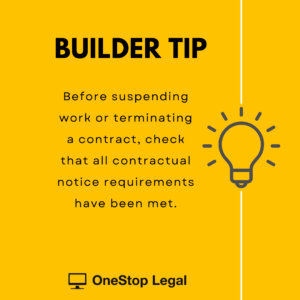
Step 3 – Suspension of Works
Many contracts allow a builder to suspend work if a client fails to pay, but only after:
- a valid default notice is issued
- the cure period has passed
Suspending without following the contract can create risk.
Step 4 – Termination
If payment is still not made after the required notices, termination may be available.
Termination is a serious step and must:
- comply with the contract
- follow the correct process
- be properly documented
Wrongful termination can expose a builder to counterclaims.
Step 5 – Recovery Options
If payment remains unpaid, builders may consider:
- formal demand letters
- QBCC involvement
- QCAT proceedings
- debt recovery or legal proceedings
The correct option depends on the contract, amount, and type of dispute.
How Builders Can Reduce Payment Disputes
Many disputes arise because variation or payment processes weren’t followed.
Best practices include:
✔ Always document variations in writing
✔ Get client approval before extra work
✔ Issue progress claims on time
✔ Keep detailed records and photos
✔ Use clear, compliant contracts
Strong paperwork prevents weak disputes.
Final Thoughts
When a client refuses to pay, it doesn’t automatically mean you are without options — but the way you respond matters. Following your contract and Queensland law is essential to protecting your right to be paid.
Need Guidance on a Builder Dispute?
If you are dealing with unpaid building invoices or a contract dispute, OneStop Legal can assist with contract review, notices, and dispute pathways under Queensland law.
📞 Contact us today to discuss your situation.